New Pricing on Concrete Pills Effective April 1st
April 3, 2019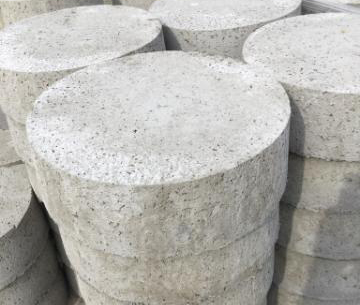 Please note that starting April 1, 2019, the price of Keystone Concrete Products’ concrete pills will increase by 7 percent.
Plan-Do-Study-Act: Getting It Done the Deming Way
 W. Edwards Deming—engineer, educator, and management consultant—left his mark on the working world with his revolutionary productivity principles. Although he advised international corporations, his teachings also can help local contractors improve how they work and increase profits.
Plan-Do-Study-Act
Deming’s Plan-Do-Study-Act (PDSA) cycle is particularly helpful. It’s based on applying four steps to projects, so that the next time you work on a similar project you can do it better and faster.
For example:
Say you have a decking job to complete and want to make the fastening choice that will allow you to finish the job effectively and as quickly as possible.
Plan: You identify your options as either face screws or a clip system.
Do: You start the project and use both types of fastenings in the beginning.
Study: You evaluate which fastening method is quicker.
Act: You use the fastening system that took the least amount of time for the rest of the job and on future projects.
While very basic, this scenario demonstrates how you can apply the PDSA process to your business. As you look for ways to boost efficiency and profitability, think about how you can put the Plan-Do-Study-Act concept to work for you.
Stay tuned for more practical applications of Deming’s ideas in our upcoming newsletters.
Product Spotlight: Fiberon® Good Life Decking
February 1, 2019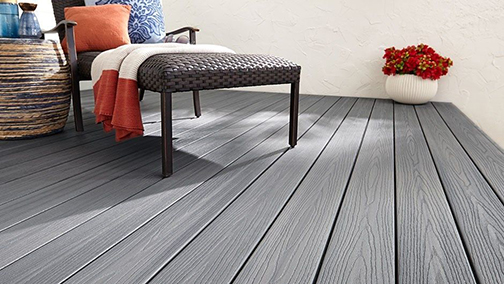 Homestead Outdoor Products is now stocking Fiberon Good Life Decking to replace Wolf’s recently discontinued Terrace Decking line. Wolf will serve as the area distributor of Good Life Decking.
With similar pricing and features as Terrace Decking, Fiberon Good Life Decking is filling the “good” spot in our “good, better, best” options lineup. It offers low maintenance—thanks to its composite construction, capping on three sides, and protective finish—at an affordable price point. We carry two multi-chromatic colors, Beach House and Bungalow, which give the rich look of tropical hardwoods without fading, warping, or splintering.
Call us to learn more about this attractive and durable decking.
Capped Composite Decking Versus PVC Decking: What’s the Difference Anyway?
 Customers look to their contractors for expert guidance on which decking material will serve them best in looks, durability, and price. So, when faced with the choice between capped composite or PVC decking, which should they pick?
In our local area, many property owners choose PVC decking. Composite decking, however, has become a fan favorite nationally.
The following are some key considerations to help educate customers so that they understand the differences and advantages of each.
Capped Composite Decking
Capped composite decking has an inner core made from a combination of recycled wood and plastic. Boards are “capped” with a plastic coating to resist moisture infiltration and help prevent mold and mildew.
Pros
- Costs less than PVC decking
- Resembles the beauty of natural wood
- Doesn’t require sanding, staining, or sealing
- Resists mold, mildew, splitting, splintering, staining, scratching, and fading
Cons
- Absorbs and retains heat from the summer sun more than wood or PVC decking does
- More difficult to work with (e.g., heavier to carry; pre-drilling required because face-screws aren’t recommended)
- More susceptible to moisture than PVC (not recommended for decks close to pools, hot tubs, or natural water sources)
PVC Decking
PVC decking is made entirely from plastic (polyvinyl chloride).
Pros
- Completely free from rot and insect damage because it contains no organic materials
- Doesn’t require sanding, staining, or sealing
- Resists mold, mildew, splitting, splintering, staining, scratching, and fading
- Longer-lasting (generally) than capped composite decking
Cons
- Expands and contracts more than wood or capped composite decking
- More expensive than capped composite decking
Keep in mind that different brands and decking lines vary in construction and quality. If you need help weighing the pros and cons of the decking products we offer, we’re just a phone call away!
Wolf® Siding PRO Event
 Watch your mail for a postcard with details about the Wolf Siding PRO event that we’re hosting on February 28, 2019. Wolf will be on site to train you and your team on how to do precise—and call-back-free—installations.
Build On Trust—Jump-start 2019 at Our Open House Winter Workshop
 When: Wednesday, February 6, 2019. FREE hot breakfast at 6:30 a.m.; workshops begin at 7:30 a.m.
Where: Homestead Outdoor Products, 905 W. Main St., New Holland, Pa.
Why: Learn valuable business-building tips and product information to help you succeed in 2019. This year’s 20-minute workshops include:
- Reputation Building: Todd Burgard of Burgard Design will discuss the importance of building your brand’s reputation and share how to accomplish it unselfishly.
- Designing Win-Win-Win Contracts: Stuart Jeffcoat of Burgard Design and Ken Burkholder of Homestead Outdoor Products will engage in a dialogue about setting informal and formal contracts and how to make winners of all parties involved.
- Ask the Experts Q&A Panel: Manufacturers’ representatives and a marketing professional will answer your questions about products, installation, sales, marketing, or any other areas of interest. Come prepared to share!
- Vertical Cable Railing and Lighting Demo: Superior Plastics Products rep Ted Parmer will give product demonstrations of Key-Link Fencing and Railing’s vertical cable railing and Placid Point Lighting’s outdoor LED lighting.
Don’t miss it! Call Daniel, Ken, or Merv at 717-656-9596 to sign up today!

Tips for Defining Your Business’s Focus
October 8, 2018- Don’t try to be all things to all customers.

If you’re always coming in too low on Home Advisor quotes or losing your shirt on budget-conscious residential customers, you’re seeing signs that maybe you’re pursuing or taking work that isn’t a good fit for your company.
- Have a company mission statement that defines your vision for your
business’s purpose and value to the marketplace.
It can be a useful tool for guiding your prospecting efforts.
- Realize that what you view as your preferred target market might not be realistic right now because of how customers perceive your company.
To appeal to the customers you consider ideal, it might require time, patience, and consistent effort to demonstrate that you deliver the value they seek.
Then and Now: Horse Fencing

VINYL HORSE FENCES—THEN
Way back when, in colonial times, whitewashed wood board rail fencing was the traditional choice for agricultural and other utilitarian purposes. It became known as “horse fencing” because it was ideal for keeping horses corralled. Because the fences were made of wood, they became a major spring project as miles upon miles of fencing needed to be repaired and repainted each year.
Eventually, vinyl rail fencing emerged that could offer the same clean, whitewashed appearance with low maintenance needs. As vinyl fences began to prove their value to farmers, ranchers, and homeowners, they paved the way for the creation of other vinyl outdoor products.
 VINYL HORSE FENCES—NOW
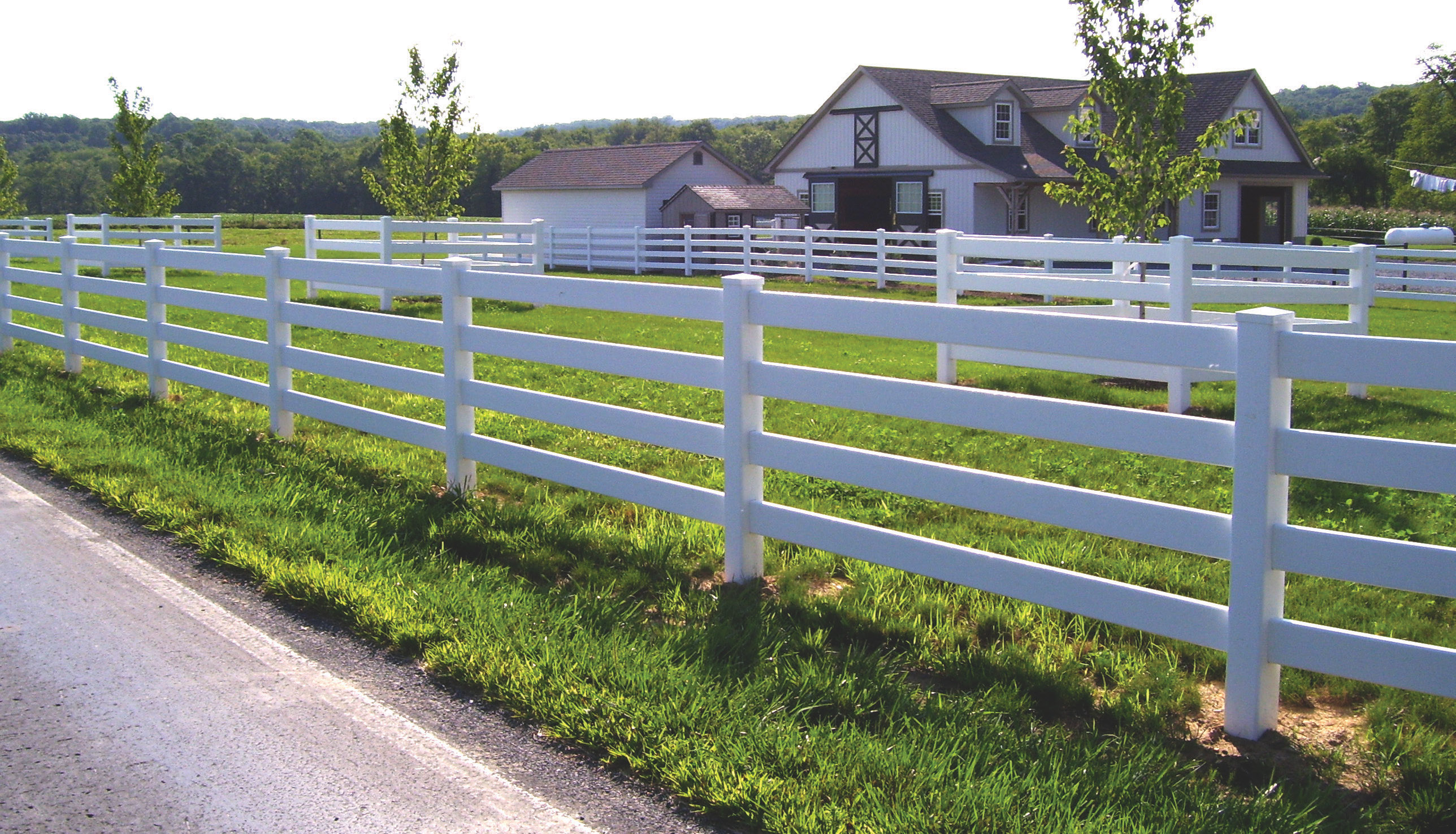
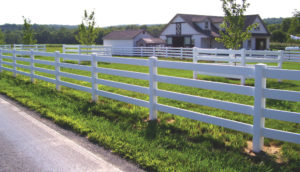
Today, vinyl rail fencing comes in a variety of colors. It’s simple to install and constructed using 5’ x 5’ posts that are secured to the ground with concrete. The posts have routed holes to receive the 1.5” x 5.5” or 2” x 6” rails, which have tabs to prevent them from becoming disconnected from the posts. Gates can be built off-square to accommodate rolling terrain.
Vinyl rail fences primary uses include:
• Containing farm animals (except for cattle, which might break the fence)
• Marking property boundaries
• Providing foot-traffic guidance
• Marking barriers around shallow ponds and other minimal-risk property features
Which Will You Be Known For? Price, Quality, or Speed of Delivery
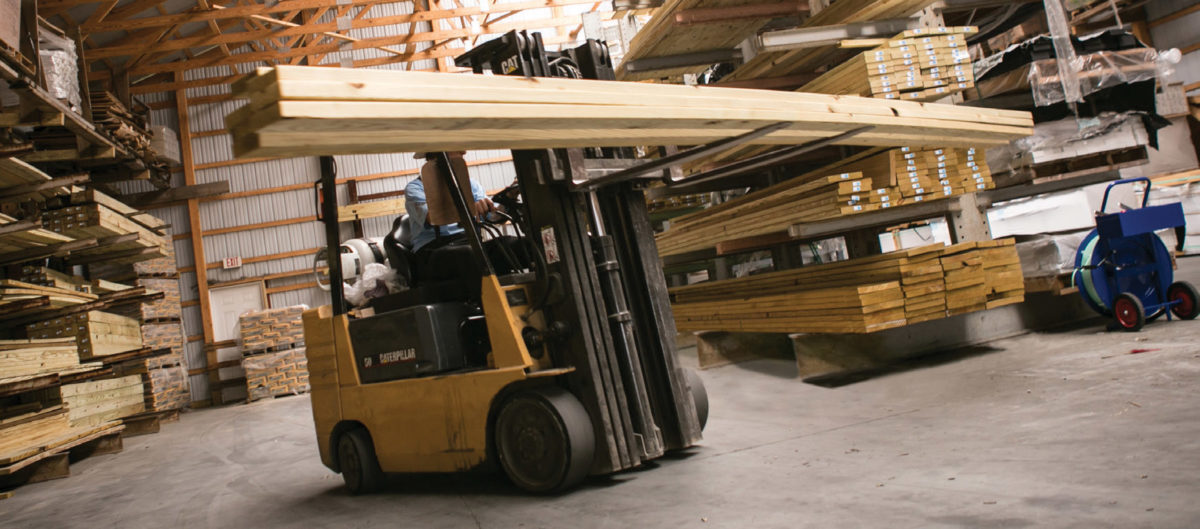
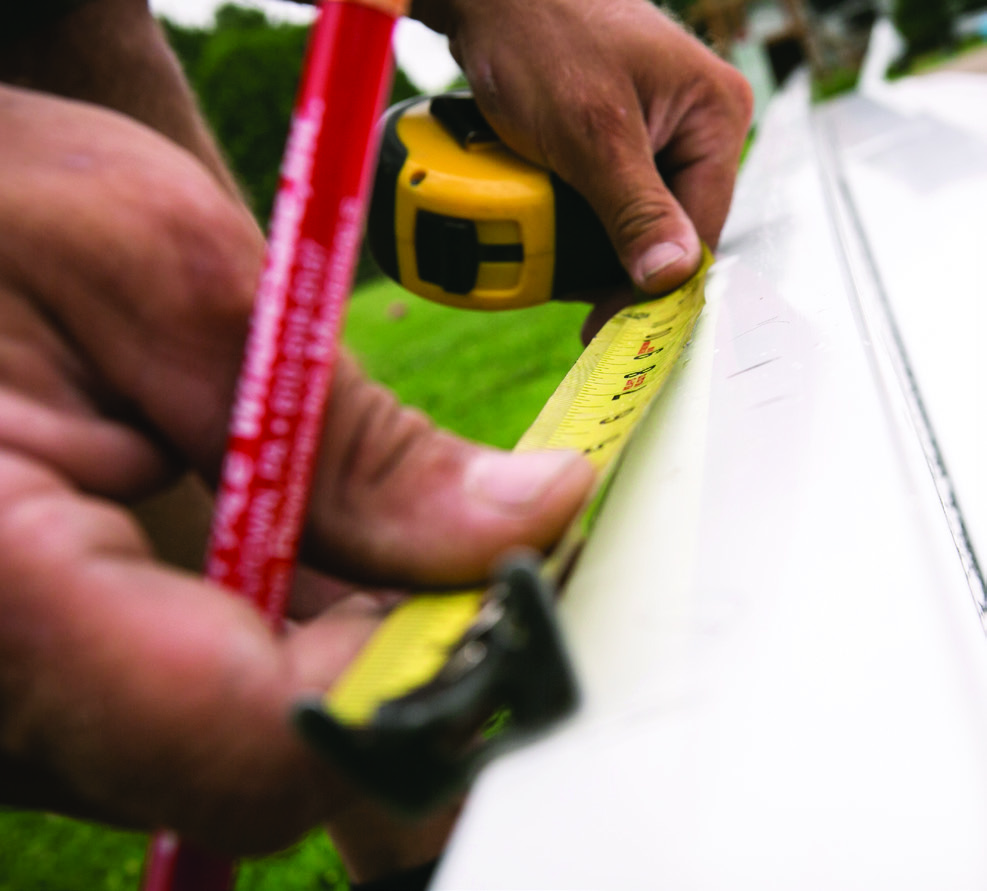 When providing services and products to your customers, you have an important decision to make: Will your company be known for its low prices, exceptional quality, or speed in getting the job done?
Achieving all three is a nearly impossible feat:
- Increasing speed usually increases costs (through hiring additional labor or buying equipment) and may diminish quality (if a faster turnaround is at the expense of proper attention to detail).
- Improving quality often adds cost (via higher-grade materials and/or workers with specialized skills) and pushes out completion dates (due to the extra attention and care given to the job).
- Decreasing costs may sacrifice a quality end result (due to using lower-quality materials or less-experienced workers). There’s often a give and take, so it’s critical to think about what you want your brand to be known for. Rarely, can businesses market themselves as “lowest prices,” “best quality,” and “fastest.” Usually, they become known for one or two, at best.
Consider:
- Harbor Freight Tools vs. Snap-on
- Kia vs. Mercedes Benz
- Walmart vs. Nieman Marcus
So, how can you determine the right legacy to build for your company?
That’s both easy and difficult at the same time! It involves knowing your company’s core strengths. Rely not only on your gut for figuring this out, but also ask for candid feedback from your customers. If there’s a mismatch, you’ll have some work to do, either to shift the scales to what you want to be known for in the marketplace or to embrace and strengthen the public perception that already exists.
New Product Spotlight: Wolf Portrait™ Siding
August 6, 2018 We are pleased to now offer Wolf Portrait Siding.
Your customers will love its:
- Authentic wood-grain texture
- Superior protection against moisture
- InfinitySeam™ Technology, providing a precise fit
- Proprietary ColorWatch™ premium ASA capstock that helps block UV rays and prevent fading
Wolf Portrait Siding is available in two collections and six colors. It’s made in the USA and comes with a limited lifetime warranty.